Psychiatry Teams Demonstrate Leadership at the 2026 APA Annual Meeting
By Office of the President | Jun 2, 2026
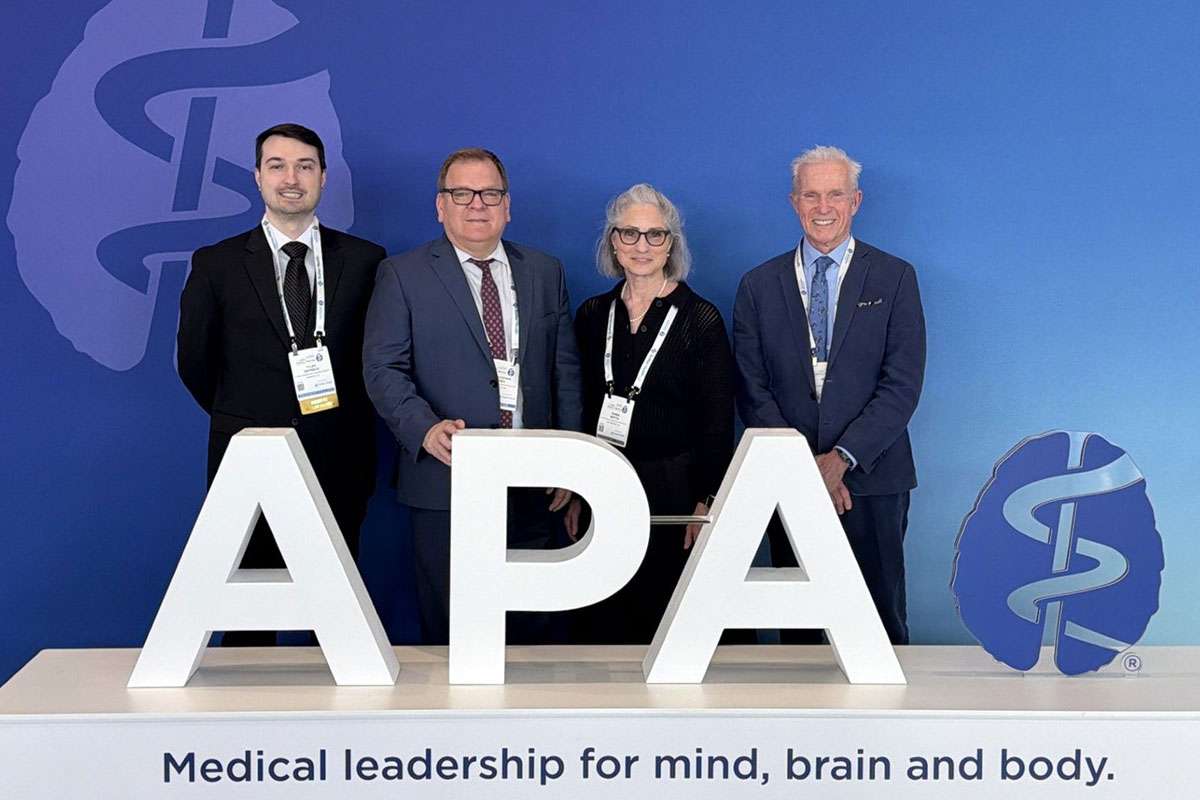
Faculty, residents, and students from Downstate’s Department of Psychiatry and Behavioral Sciences contributed to national discussions on mental health care, education, research, and advocacy at the 2026 American Psychiatric Association (APA) Annual Meeting.
Among the highlights, Lana Irons, M.D., Assistant Professor and Associate Program Director, for her participation in an APA TV interview and the session “Transgender Psychiatrists Speak,” where openly transgender psychiatrists shared their personal and professional experiences. The discussion emphasized the importance of supporting transgender trainees and colleagues, normalizing gender transition within the profession, and promoting inclusive care.
Dr. Irons highlighted how her lived experience and positive training at Downstate inform her patient-centered, bias-free approach. Her contributions underscore the vital role of visibility and advocacy in advancing health equity and compassionate mental health care. Watch her APA TV panel discussion here.
Faculty leadership was also reflected through the contributions of Michael F. Myers, M.D., Professor of Clinical Psychiatry and member of the APA Scientific Program Committee, and Ramaswamy Viswanathan, M.D., Dr.Med.Sc., Immediate Past President of the APA and Professor Emeritus of Psychiatry and Behavioral Sciences. Dr. Myers delivered presentations on physician health, medical error and harm reduction, stigma among psychiatrists, aging and illness in physicians, and conflict resolution for early-career psychiatrists. He also highlighted the strong participation of Downstate trainees throughout the meeting and noted the impact of keynote presentations by Dr. Sanjay Gupta and former U.S. Surgeon General Dr. Vivek Murthy. Dr. Myers is enthusiastic about the APA’s return to the Javits Center next year.
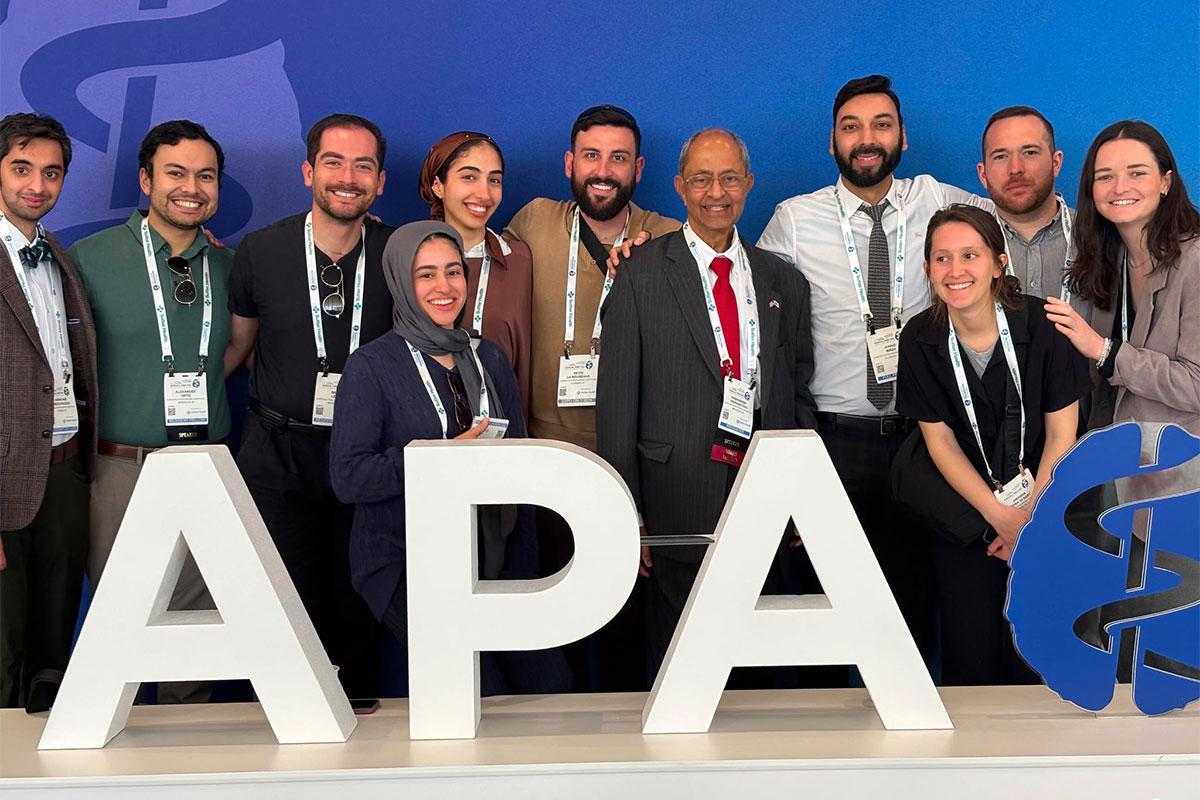
Downstate residents and students made notable contributions, including Alexander Ortiz, M.D., PGY-3 Psychiatry Resident, who participated in the Children of Psychiatrists 2026 session, and Coleman Yorke, M.S.1, who presented a research poster, demonstrating learner engagement across multiple stages of training.
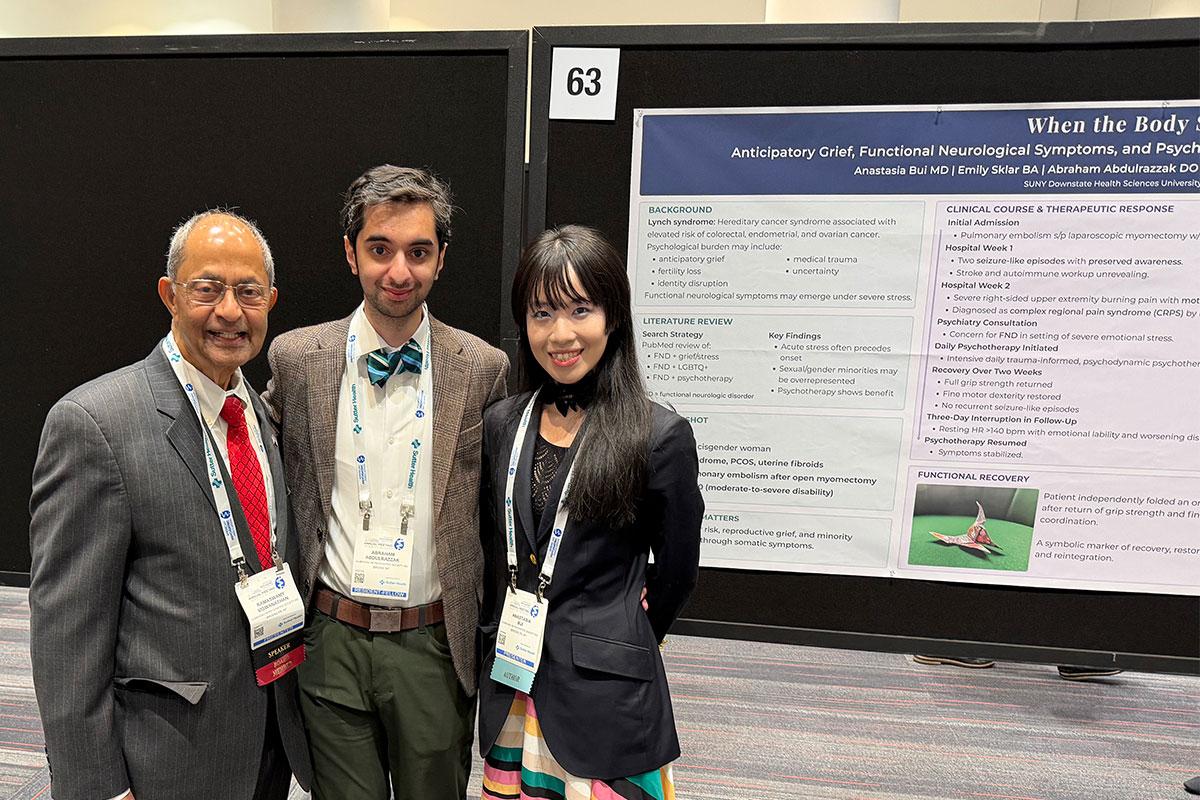
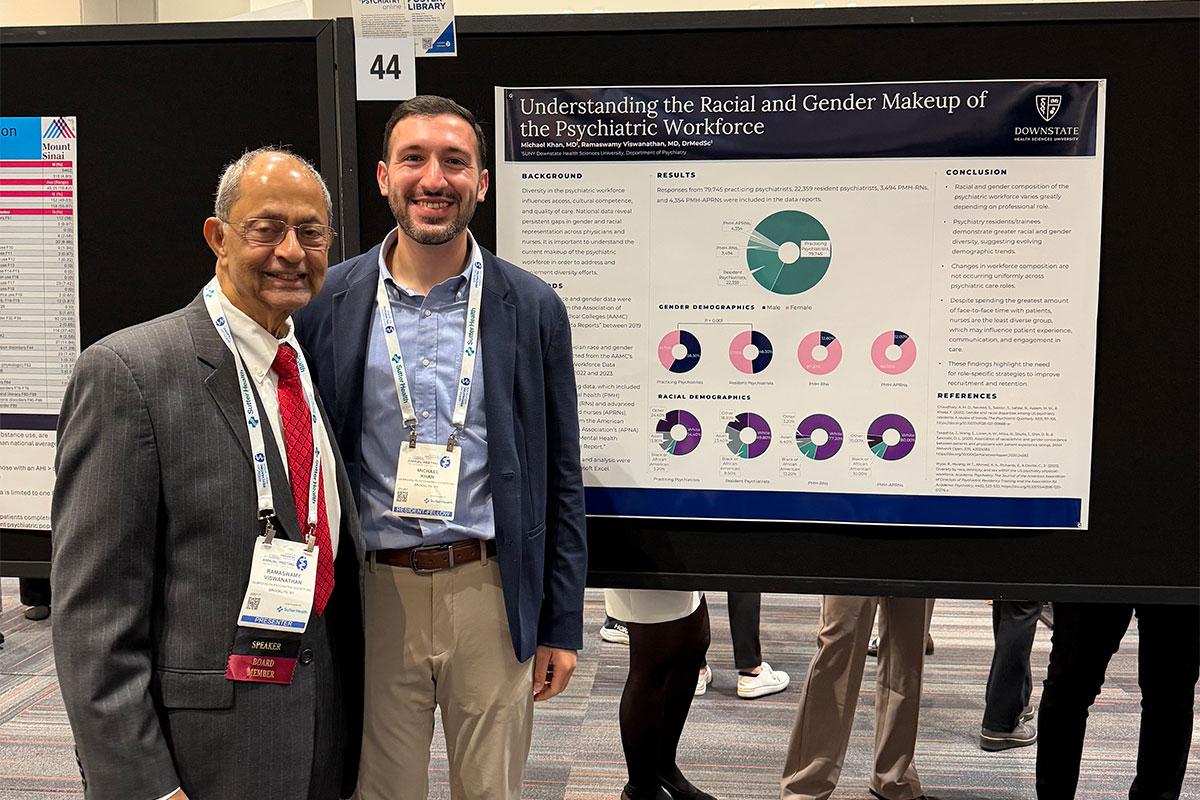
Dr. Viswanathan remained actively involved throughout the conference, mentoring trainees and collaborating on scholarly presentations. He co-authored posters on workforce diversity, anticipatory grief, and functional neurological disorder, and delivered presentations on positive psychiatry, depression prevention, lifestyle medicine, professionalism among international medical graduates, and circadian rhythm. He also served as a judge for the APA Mindgames competition.
We also congratulate Yazan Nagi, M.D., PGY-3 Psychiatry Resident and recipient of the SAMHSA Minority Fellowship, and Kate Boudreau, M.D., PGY-3 Psychiatry Resident and recipient of the APA Public Psychiatry Fellowship, for developing an innovative social psychiatry simulation-based curriculum that has strengthened residency education.
The meeting highlighted Downstate Psychiatry’s continued commitment to advancing the field through scholarship, mentorship, innovation, clinical excellence, and the training of emerging leaders in psychiatry.
From scientific scholarship and mentorship to clinical innovation and professional leadership, Downstate Psychiatry continues to make significant contributions that strengthen the profession and improve the lives of patients and families.
Tags: Psychiatry