Patient Navigator Program Expands to Family Medicine and Public Health
By Office of the President | Oct 20, 2026
For many of our patients, getting care involves more than scheduling an appointment. Transportation, medication costs, language barriers, and coordinating visits with several specialists can stand between a patient and the treatment they need. For someone managing a chronic illness, these difficulties can interrupt care that requires regular attention.
As a safety-net hospital, University Hospital at Downstate serves patients whose medical needs are often compounded by financial and social pressures. Our responsibility includes understanding what makes it difficult for patients to obtain care and helping them address those obstacles.
This work gives practical meaning to #KeepCareClose. Having healthcare services in the community matters, but patients must also be able to reach those services and continue their treatment. Patient navigation helps make that connection, supporting patients between visits so they can stay engaged with care close to home.
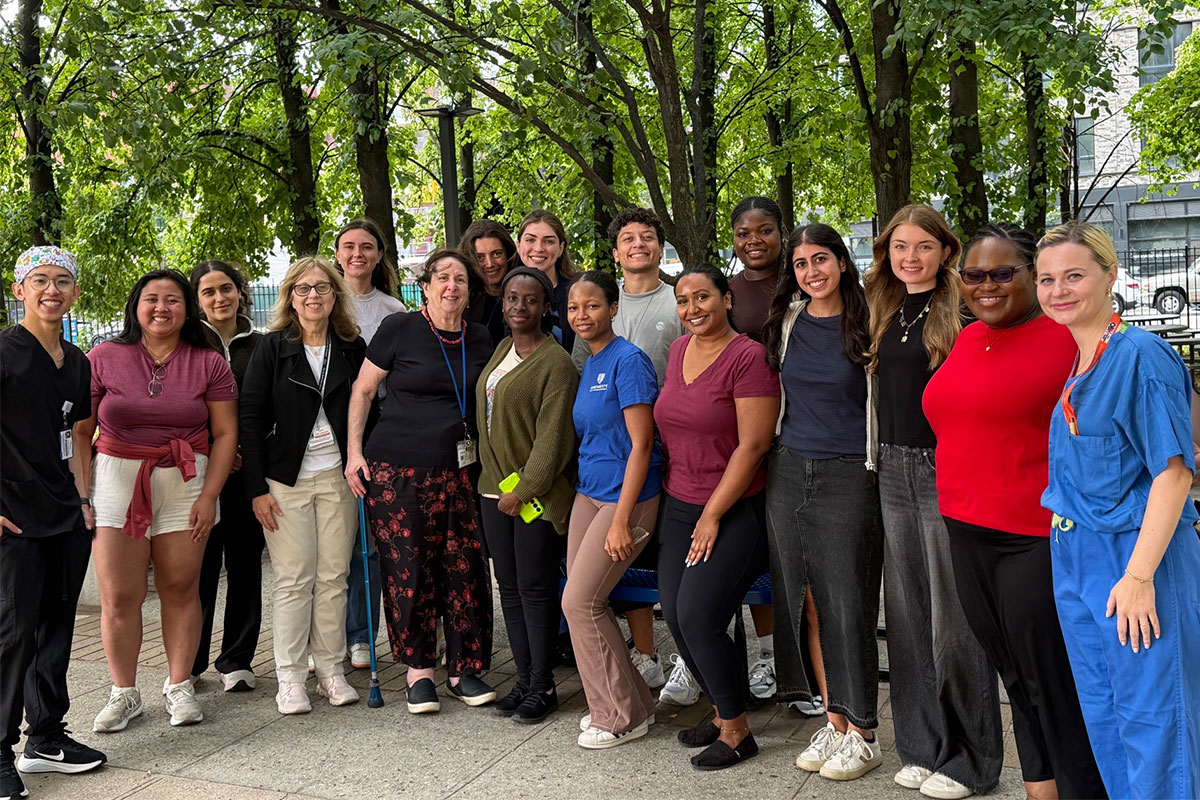
Downstate’s unique student-run Patient Navigator Program is growing in two distinct ways this year. A new Family Medicine pilot extends patient navigation beyond Rheumatology and Dermatology into primary care. A separate collaboration with the School of Public Health adds support for connecting patients with community resources and evaluating the program’s work.
First announced in July 2021, the program began under the leadership of Ellen Ginzler, M.D., MPH, with six second-year medical students in the Division of Rheumatology. Dr. Ginzler secured a $50,000 grant from Aurinia Pharmaceuticals to support the launch, in partnership with the Brooklyn Free Clinic and Brooklyn Health Disparities Center, now the Brooklyn Health Promotion Center. The program was established to help patients facing barriers to care stay connected with their medical teams and to teach students how those barriers affect health. Thanks to the generosity of the College of Medicine Alumni Association Board, the program was recently awarded $3,000 to continue its work.
Since its launch, 62 medical students have participated, supporting more than 200 patients through nearly 1,500 documented encounters. The Family Medicine pilot builds on that experience, bringing continuing patient support into a primary care setting.
For 2026–2027, three newly selected second-year medical students joined the pilot, while nine others are working with patients in Rheumatology and Dermatology. Eight third- and fourth-year students are continuing in the program with their patients, maintaining the relationships they have already established. The newest cohort drew a record number of applications, exceeding the available positions.
Navigators maintain contact between medical visits, help patients address difficulties keeping appointments or obtaining medications, and connect them with transportation and other resources. For patients seeing several specialists or managing care with limited support, that relationship provides someone familiar to turn to for help with the next step.
These relationships also give students a fuller understanding of their patients’ lives. A missed appointment may reflect an unavailable ride. A prescription that has not been filled may reflect cost or confusion about instructions. Taking the time to understand those circumstances helps students ask better questions and work with patients on practical solutions.
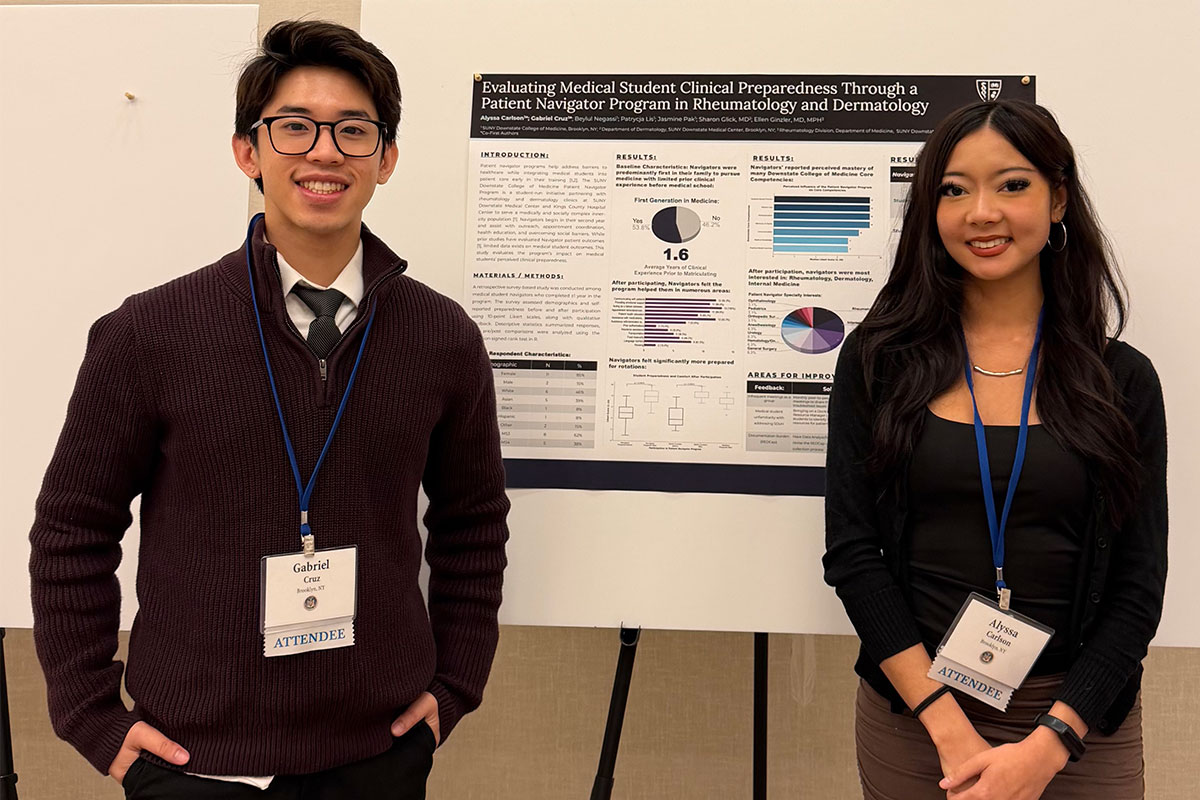
Fourth-year medical students Alyssa Carlson and Gabriel Cruz, both Class of 2027, serve as co-managers, with third-year medical student Olena Les, Class of 2028, serving as assistant manager.
As the program reaches more patients, the School of Public Health collaboration brings additional expertise in community resources and data analysis. Aimee Afable, Ph.D., MPH, Associate Dean for Community Engagement, helped develop this collaboration. Recent MPH graduate Fanyu Hercules-Tawe supports data management and analysis, while DrPH student Annalissa MacPherson connects patients with food, transportation, and other community resources. Their involvement supports navigation across the participating clinical settings.
Research has grown alongside this work. Student navigators have contributed to peer-reviewed publications and presented at the American College of Rheumatology and the New York State Rheumatology Society. At Downstate’s 2026 Patient Safety and Quality Improvement Fair, the program’s poster received the best presentation award in the medical student category.
My thanks to Dr. Ginzler and fellow faculty advisers Sharon Glick, M.D., Chair of Dermatology and Professor of Clinical Dermatology and Pediatrics; Alla Akivis, M.D., Clinical Associate Professor of Family and Community Medicine; and Marylin Pierre-Louis, M.D., Clinical Assistant Professor and Medical Director in Family and Community Medicine, for guiding this work.
I also thank our student navigators and Public Health colleagues for staying connected with our patients and taking the time to understand their needs. For a safety-net institution like Downstate, helping patients obtain and continue care is part of the care itself.
Tags: Downstate Health, Family Medicine, School of Public Health