Downstate Expert Featured in United Nations Report on AI and Mental Health
By Office of the President | May 19, 2026
Downstate’s growing work in artificial intelligence and mental health recently received international recognition through a new United Nations Office of Counter-Terrorism (UNOCT) report focused on digital tools that support victims and survivors of terrorism.
The report, “Gap Analysis of Digital Tools to Support Victims of Terrorism”, explores how responsible innovation—including AI-driven mental health and psychosocial support tools—can help expand access to care, strengthen crisis response, improve coordination among service providers, and support long-term recovery for trauma-affected communities worldwide.
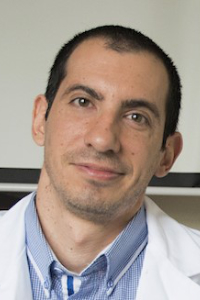
Among the tools featured in the report were two AI platforms developed through SUNY’s Global Center for AI in Mental Health (GCAIMH), reflecting Downstate’s expanding role at the intersection of artificial intelligence, trauma-informed care, public health, and humanitarian response. Salvador Durá-Bernal, Ph.D., Associate Professor of Physiology and Pharmacology, and Director of GCAIMH at Downstate, has helped lead the development of several AI-supported mental health initiatives focused on ethical, evidence-based care.
The featured tools include JulienPFA, an AI-driven psychological first aid platform that supports disaster survivors, and Ther-Assist, an AI-supported clinical tool developed in collaboration with Google to help psychotherapists deliver personalized, evidence-based care for depression and anxiety.
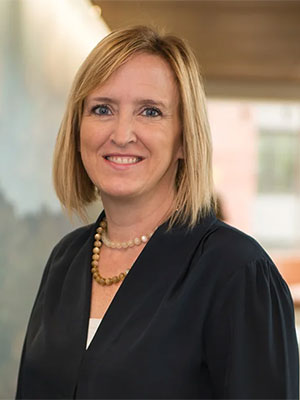
Amy Nitza, Ph.D., LMHC, Director of the Global Center for AI in Mental Health at the University at Albany, and an internationally recognized expert in disaster mental health and trauma recovery, also served as a reviewer for the report alongside Dr. Durá-Bernal. Both were recognized in the publication’s acknowledgments and invited to serve as expert panel speakers at the United Nations launch event and the expert roundtable discussion.
The report reflects a broader international effort to explore how emerging technologies can support mental health and humanitarian response while protecting privacy, ethics, and equitable access to care.
Congratulations to Drs. Durá-Bernal and Nitza, and the Global Center for AI in Mental Health team for representing Downstate in collaboration with the United Nations and for advancing global conversations on AI, mental health, and trauma-informed care.
Tags: Research, Artificial Intelligence