Downstate Expands National Mentorship and Research Training Through NIH-Funded SPNSOR Program
By Office of the President | May 19, 2026
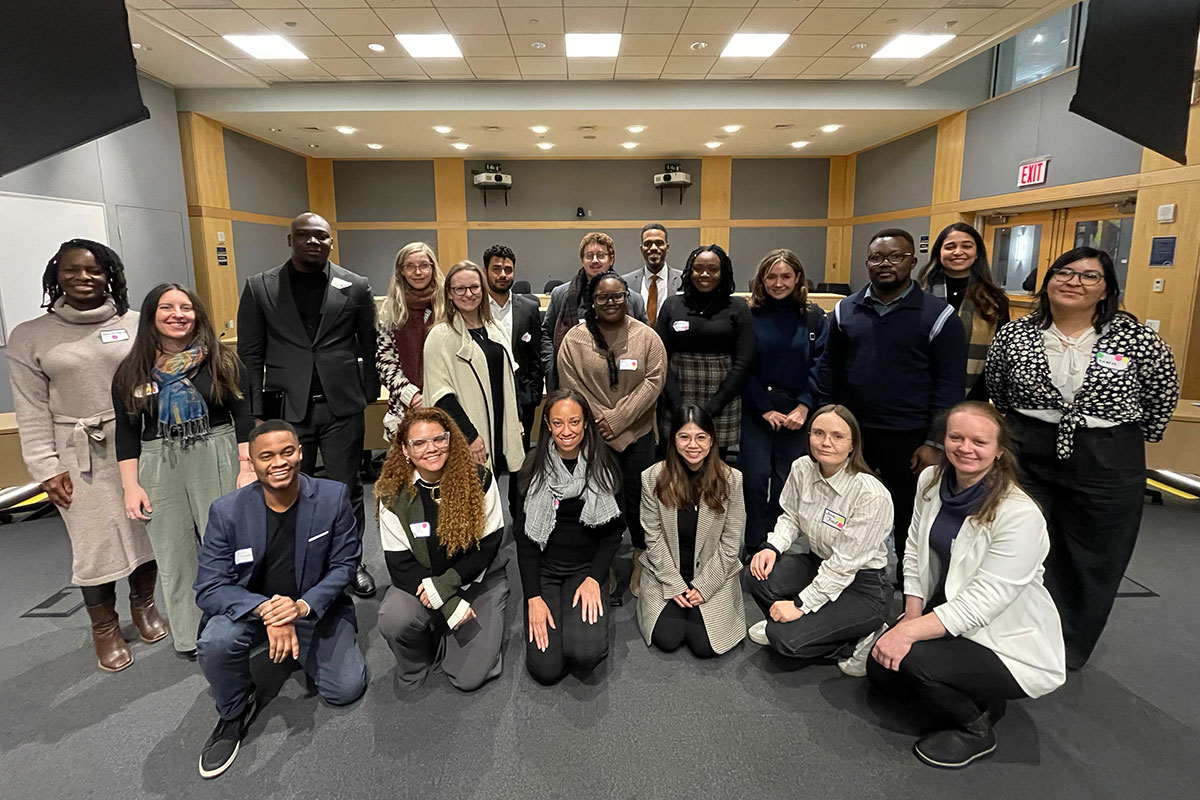
Downstate recently welcomed a new cohort of rising biomedical researchers from across the country through its NIH-funded Structured Professional Networks for Successful Outcomes in Research (SPNSOR) program.
From January through March, 21 postdoctoral fellows representing 19 institutions nationwide participated in the program, which helps early-career scientists build the mentorship networks, leadership skills, and professional strategies needed to succeed in academic medicine and biomedical research.
Led by W. Marcus Lambert, Ph.D., Associate Vice President for Research and Associate Professor, and head of the Lambert Lab, along with the SPNSOR leadership team, including Alexandra Kuvaeva, M.D., Ph.D., Postdoctoral Researcher, and Amanda Carbajal, Ph.D., Health Equity Postdoctoral Research Scientist. SPNSOR focuses on a critical stage in the scientific careers of early postdoctoral years, when mentorship, professional networks, and career guidance can have a lasting impact.
As part of the experience, fellows traveled to Downstate for an immersive kickoff program and the second annual SPNSOR Mentorship Symposium, where fellows engaged with researchers, mentors, and scientific leaders through workshops, panel discussions, and networking sessions. They also took part in community-building activities designed to help early-career scientists navigate the challenges and opportunities of academic medicine and biomedical research.
The symposium featured keynote speaker Sherilynn Black, Ph.D., a neuroscientist and Associate Vice Provost for Faculty Advancement, and Assistant Professor of the Practice of Medical Education at Duke University School of Medicine, who spoke about resilience, self-care in science, and navigating today’s increasingly competitive research environment.
Fellows described the experience as energizing and deeply valuable, and particularly appreciated the opportunity to connect with peers navigating similar challenges in research and academic medicine. They discussed the importance of building professional networks, sharing experiences openly, and creating space to think intentionally about long-term career goals beyond the day-to-day demands of the laboratory. said the program allowed them to reflect on their future, strengthen their sense of community, and gain perspective on the many pathways available within biomedical science and research leadership.
By bringing together emerging scientists from across the country, SPNSOR continues to strengthen Downstate’s growing national role in mentorship, workforce development, and career advancement in biomedical research and academic medicine.
The 2026 SPNSOR Fellows and their institutions are:
- Khyati Raina, Ph.D. — Albert Einstein College of Medicine
- Sueny Paloma Lima dos Santos, Ph.D. — University of Missouri School of Medicine
- Lan Phi, Ph.D., M.S. — University of Texas MD Anderson Cancer Center
- Destiny Van, Ph.D. — SUNY Upstate Medical University
- Mandy Chan, Ph.D. — University of Chicago
- Larissa Leandro Da Cruz, Ph.D. — University of Massachusetts Amherst
- Tana Pottorf, Ph.D. — The Ohio State University
- Joaquin V. Ruiz, Ph.D. — New York University Grossman School of Medicine
- Danielle Ongondo, Ph.D. — Binghamton University
- Alicia Lane, Ph.D. — Emory University
- Anna S. Korol, Ph.D. — University of Pittsburgh
- Dennis Makafui Dogbey, Ph.D. — Seattle Children’s Hospital
- Sam Nunez, Ph.D. — University of Pittsburgh
- Chryzel Angelica B. Gonzalez, Ph.D. — University of Texas MD Anderson Cancer Center
- Mingming Zhao — University of Mississippi
- Meng-Jung Wen, Ph.D., BPharm, M.S. — University of Rochester School of Medicine and Dentistry
- Azhar Ahmad, Ph.D. — University of Texas at El Paso
- Aida Akhoundi, Ph.D. — University of California, San Diego
- Akande Adesewa, Ph.D. — Nationwide Children’s Hospital
- Maru Adewole, Ph.D. — University of Pennsylvania
- Elizabeth Hill, Ph.D. — UT Southwestern – Dallas
The 2026 SPNSOR Fellows are now connected to a growing national community of peers, mentors, researchers, and institutional leaders committed to strengthening mentorship and advancing the next generation of biomedical scientists. Fellows can read more about the program and their cohort experiences at www.mentornetworks.org.
Recruitment for the 2027 SPNSOR cohort will begin later this year. Postdoctoral trainees who will have completed less than one year of postdoctoral experience by January 2027 are encouraged to apply.