Downstate Researchers Develop AI Tool to Support Mental Health, Clinicians
By Office of the President | Mar 17, 2026
Access to timely mental health care remains a major public health challenge in New York City. Nearly one in seven adults, about 945,000 people, reported an unmet need for mental health treatment in the past year, according to the New York City Department of Health and Mental Hygiene. In Brooklyn, home to more than 2.7 million residents, the strain appears in long wait times, uneven access across neighborhoods, and growing demand for behavioral health services across many communities.
Downstate researchers are exploring how artificial intelligence can assist clinicians in responding to that growing need.
SUNY Chancellor John B. King, Jr. has identified artificial intelligence as a systemwide priority through the AI for the Public Good initiative, which focuses on technologies that support the workforce, promote equity, and address community needs.
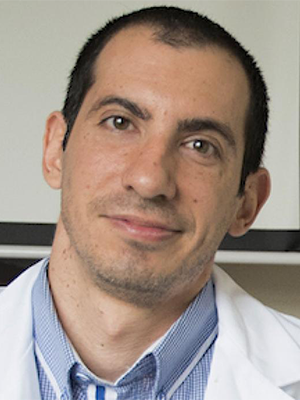
Salvador Durá-Bernal, Ph.D., Associate Professor of Physiology and Pharmacology and Director of the Global Center for AI in Mental Health (GCAIMH), is leading the development of Ther-Assist, an artificial intelligence tool designed to support therapists during clinical care.
Ther-Assist is designed to assist clinicians while keeping the therapist at the center of care. During therapy sessions, the system can analyze conversations via a secure interface and provide suggestions based on established treatment approaches, including cognitive-behavioral therapy. Clinicians decide whether and how to use those suggestions. After sessions, the platform can help generate documentation, analyze session patterns, and suggest homework aligned with the treatment plan.
The goal is to support therapists as demand for mental health services grows. Ther-Assist is intended to help maintain consistent use of evidence-based treatments, reduce administrative work, and allow clinicians to focus on patient care.
The project grew out of research conducted through GCAIMH, which brings together expertise from clinical psychology, psychiatry, public health, computer engineering, neuroscience, and machine learning. An early prototype was developed with support from Google. The system is now being expanded using computing resources from the SUNY AI Platform.
GCAIMH is a collaboration among Downstate, the University at Albany, and the Health Innovation Exchange (HIEx). The initiative examines how artificial intelligence can be used responsibly in clinical settings, with attention to oversight, transparency, and evaluation.
The work reflects the needs of our communities, as Downstate treats many patients who face barriers to mental health care. Tools that support clinicians while maintaining the quality of care may help address those gaps.
Ther-Assist remains under development and will undergo testing before broader implementation. Demonstrations of the tool are scheduled next month for local, state, and international organizations.
For clinicians working to meet growing demand for mental health care in Brooklyn, the project reflects an effort to develop tools that support therapy while keeping the clinician–patient relationship at the center of care—an approach grounded in the realities faced by patients and providers across the borough.
Learn more about the Global Center for AI in Mental Health