Downstate Mourns the Passing of Dr. Gerald Deas
By Office of the President | Feb 3, 2026
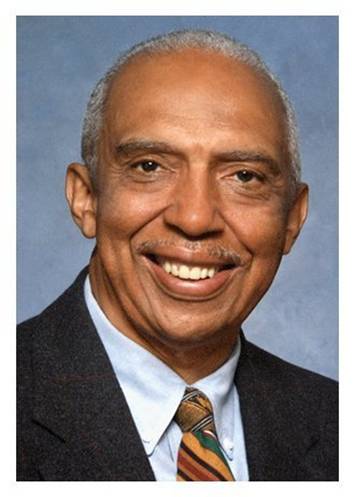 Downstate mourns the passing of Gerald Whitehead Deas, M.D., MPH, MS, Hon. ScD, Hon. DHL, a proud 1962 graduate of Downstate’s College of Medicine and a singular presence
in the life of this institution. Known affectionately as Jerry, Dr. Deas carried Downstate
with him wherever his work took him, guided by a belief that medicine and public health
belong not only in clinics and classrooms, but in everyday life.
Downstate mourns the passing of Gerald Whitehead Deas, M.D., MPH, MS, Hon. ScD, Hon. DHL, a proud 1962 graduate of Downstate’s College of Medicine and a singular presence
in the life of this institution. Known affectionately as Jerry, Dr. Deas carried Downstate
with him wherever his work took him, guided by a belief that medicine and public health
belong not only in clinics and classrooms, but in everyday life.
Born and raised in Brooklyn, Dr. Deas attended Boys High School and Brooklyn College, served as a Korean War veteran, earned advanced degrees in biochemistry and public health, and completed his medical training at SUNY Downstate. He went on to serve patients and communities at Kings County Hospital, Jamaica Hospital, and Mary Immaculate Hospital.
At Downstate, Dr. Deas served as Director of Health Education Communications and Assistant Professor of Preventive Medicine, retiring in 2018. In 2019, the University awarded him an Honorary Doctor of Science, recognizing a career defined by service, creativity, and conviction.
A national pioneer in health communication, Dr. Deas became the first Black medical columnist for the New York Daily News, authored more than 1,000 columns for the New York Amsterdam News, and used radio and television to translate complex health information into practical guidance. He was especially proud of his public health advocacy on laundry starch ingestion, work that led to lasting consumer warnings and a commendation from the U.S. Food and Drug Administration.
Dr. Deas was a gifted communicator who often reminded others that it was important to share DEAS = IDEAS, a message he freely shared. He also helped found Doctors Against Murder, underscoring his conviction that violence is a public health issue.
Dr. Deas was a mentor, collaborator, and friend to many, including through his longtime association with the Arthur Ashe Institute for Urban Health and his decade-long partnership with broadcaster Bill McCreary as chief medical correspondent for The McCreary Report. Above all, he took pride in the countless students, particularly those from underrepresented backgrounds, whose paths into medicine were shaped by his guidance and generosity.
We extend our deepest condolences to his wife of 67 years, Beverly, their children, loved ones, former students, colleagues, and the many communities he served. His wit, generosity, and belief in the power of ideas will continue to inspire future generations. He will be deeply missed.
Downstate will honor Dr. Deas’s life and legacy later this month.