Veterans Day: Remembering Downstate’s Wartime Medical Legacy
By Office of the President | Nov 3, 2026
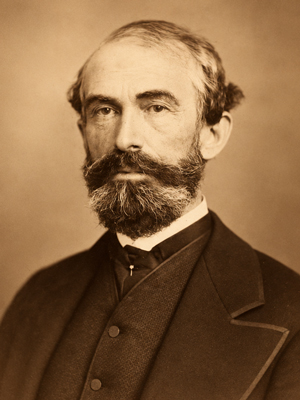
From Civil War battlefields to Brooklyn hospital wards, Downstate’s earliest physicians helped shape military medicine and care for wounded soldiers.
In July 1860, 21 physicians graduated from Long Island College Hospital (LICH), Downstate’s predecessor institution. Less than nine months later, the nation was at war, and the young medical school would find itself helping meet the urgent demands of military medicine.
LICH had already made history in 1860 as the nation’s first medical school to incorporate bedside teaching into its curriculum, bringing students directly to patients. That commitment to hands-on training would soon extend to the battlefield.
Among LICH’s founding faculty was Frank Hastings Hamilton, M.D., its first professor of surgery and a recognized authority on fractures and dislocations. Anticipating the medical challenges of war, Hamilton introduced a course in military surgery in February 1861, two months before the Civil War began.
When fighting erupted in April, Hamilton volunteered with the 31st New York Infantry Regiment. By July, he was supervising a field hospital at Centreville, Virginia, during the First Battle of Bull Run, where overwhelmed medical teams struggled to treat and evacuate wounded soldiers.
His service continued as a brigade surgeon and medical director. In 1862, he organized a U.S. Army general hospital in New York City’s Central Park. The following February, President Abraham Lincoln appointed him Medical Inspector of the U.S. Army with the rank of lieutenant colonel, personally signing his commission.
Hamilton brought that battlefield experience back to Brooklyn in 1863 when he became Chair of Military Medicine at LICH, leading what Downstate’s historical records identify as the nation’s first department devoted to the field. His wartime service reinforced the need to train physicians in more than surgical techniques. Military medicine demanded knowledge of casualty evacuation, hospital organization, sanitation, and disease prevention.
He also shared his expertise through two influential publications: A Practical Treatise on Military Surgery (1861) and A Treatise on Military Surgery and Hygiene (1865). Drawing on wartime experience, the books addressed gunshot wounds, amputations, anesthesia, casualty transportation, and medical conditions in military camps and hospitals.
LICH opened its doors to wounded soldiers, treating 211 military casualties in 1862 alone. Even as its physicians cared for the injured, the hospital continued training future doctors, some of whom would later enter military service.
For an institution still in its infancy, the Civil War was the catalyst for a longstanding connection among medical education, military service, and the treatment of wounded service members.
That connection did not end with the Civil War. Today, Downstate continues its legacy through a partnership with the VA New York Harbor Health Care System, where faculty and researchers collaborate to improve patient care and outcomes.
The spirit of service also lives within Downstate. Veterans are among its students, faculty, and staff, bringing military experience and a continued commitment to serving others. Through Veterans Day observances and recognition of their contributions, we honor those whose service extends beyond the armed forces into healthcare, education, and the Brooklyn community.
More than 160 years after its physicians answered the call to serve during the Civil War, we remember those who helped shape military medicine and honor the veterans and healthcare professionals who carry that legacy forward.