Downstate’s Emergency Physicians Look Beyond Borders
By Office of the President | Oct 6, 2026
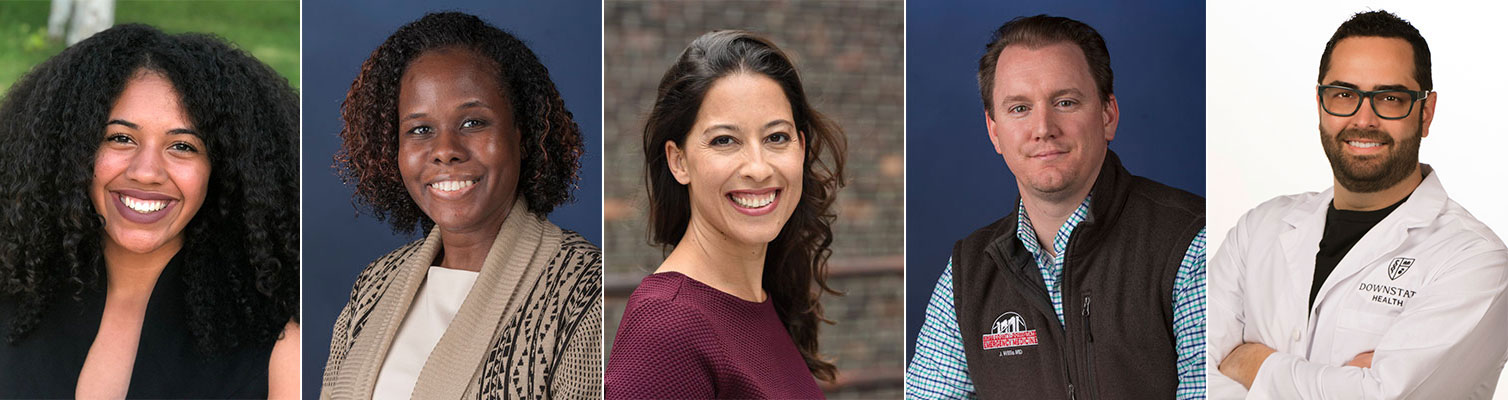
From left to right: Kiara Stanifer, M.D.; Teresa Y. Smith-Bellille, M.D., MSEd.; Christina Bloem, M.D., MPH; James Willis, M.D.; Adrian Aurrecoechea, M.D., MPH
East Flatbush is home to people whose lives and families span the globe. A 2026 New York City Department of City Planning report estimates that about 74,600 residents, 47 percent of the neighborhood, were born outside the United States. Those are figures for East Flatbush, not Downstate’s patients, but they speak to the community we serve. When someone comes to us for care, we need to understand both the person and the symptoms. That commitment is at the heart of a new article by five of our Emergency Medicine physicians.
In “Beyond Borders: Advancing Equitable Care in the Emergency Department for Migration-Affected Patients,” published in The Journal of Emergency Medicine, Kiara Stanifer, M.D., Emergency Department, Teresa Y. Smith-Bellille, M.D., MSEd., Interim Chair of Emergency Medicine; Christina Bloem, M.D., MPH, International Emergency Medicine; James Willis, M.D., Emergency Medicine Program Director; and Adrian Aurrecoechea, M.D., MPH, Division Director of Social Emergency Medicine, offer guidance for caring for immigrant, refugee, asylum-seeking, and other migration-affected patients.
What does this mean for patients? If you have a medical emergency, seek care. The Emergency Department provides an appropriate medical screening examination regardless of immigration status, insurance, or ability to pay. If an emergency medical condition is found, patients receive stabilizing treatment or an appropriate transfer. Patients can ask for a qualified medical interpreter to help explain symptoms, understand their care, and take part in decisions. They should be treated with respect, and their medical information should be protected.
The article grew from the Department’s first faculty symposium on immigrant health, which brought clinicians and community partners together to consider the needs of what Dr. Smith-Bellille calls our “global domestic patients.” The paper sets out four priorities for emergency departments: follow evidence-based guidelines to reduce bias; understand how policies and migration experiences may affect care; screen for risks relevant to each patient and provide services such as qualified medical interpretation; and build partnerships that connect patients with support beyond the emergency visit.
Those priorities can change the course of a patient’s visit. An interpreter can help a clinician understand a symptom that might otherwise be missed. A conversation about past living conditions or travel may reveal a relevant health risk. A connection to social work or a community organization may help a patient address needs that continue after discharge. The authors also stress that immigration status does not change an emergency physician’s professional and ethical obligation to provide equitable care.
We are proud of and congratulate our Emergency Department team, led by Dr. Smith-Bellille, who shared the publication with pride and thanked her colleagues for the care they provide to East Flatbush patients, both inside and outside the hospital.
This work speaks to what #KeepCareClose means for our neighbors. It is care nearby that listens, understands, and helps people find the support they need. Their article brings Downstate’s experience into a broader conversation about emergency care, with a message close to home: every patient deserves to be heard, understood, and cared for as a person.