Pearl Harbor Day: Remembering Downstate’s Wartime Legacy
By Office of the President | Dec 2, 2025
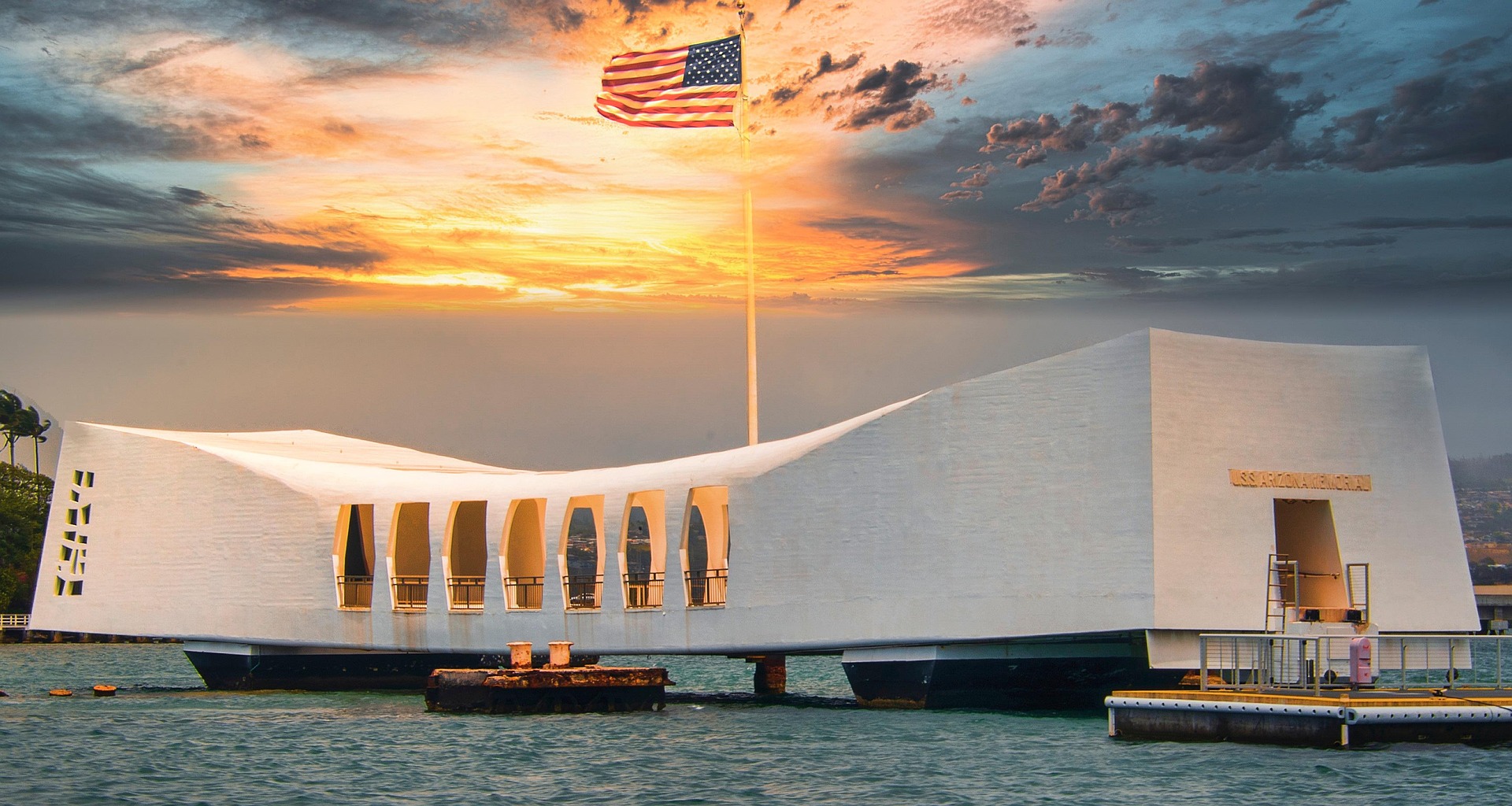
As December 7 approaches, we pause to honor a day that altered the course of history and shaped an entire generation. While the attack on Pearl Harbor in 1941 feels distant, the memories still reverberate in American life, including here at Downstate, then known as the Long Island College of Medicine (LICM).
Even before the attack, the College was preparing for a world at war. Early in 1941, the U.S. War Department called upon Downstate to help form the 79th General Hospital, a 1,000-bed military medical unit staffed by physicians, nurses, and enlisted personnel. Downstate answered without hesitation, and many of our clinicians and trainees became part of its foundation.
Under the board leadership of President Tracy Stebbins Voorhees, who served from 1936 to 1944, LICM adapted swiftly to wartime demands. Enrollment rose as young men and women sought to serve, and the curriculum shifted to an accelerated, year-round schedule that allowed students to complete four years of medical education in just three. Many were already in uniform as members of the Army and Navy reserves, reflecting the deep intertwining of medical training and military service.
Downstate’s wartime spirit lived through its graduates and faculty, whose service stretched across continents:
- Anthony R. Mascia, M.D., promoted to Captain shortly after D-Day, served in France and Belgium as Commanding Officer of the 252nd Medical Detachment and was awarded a Purple Heart.
- Adrian Kantrowitz, M.D., a graduate of Downstate’s accelerated wartime program and a veteran of the U.S. Army Medical Corps, later returned as a faculty member and became a pioneer in cardiovascular innovation, developing one of the first implantable pacemakers.
- Perrin H. Long, M.D., later Downstate’s Chair of Medicine (1960–1973), served as a Brigadier General in the U.S. Army Medical Corps and a consultant to the Chief Surgeon of the Mediterranean Theater, where he played a leading role in the early deployment of sulfa drugs.
- Randall Dudley Bloomfield, M.D. ’53, served in France as a military policeman before medical school and went on to devote five decades to Downstate and Kings County, championing global health, minority scholarships, and equity-focused medical education.
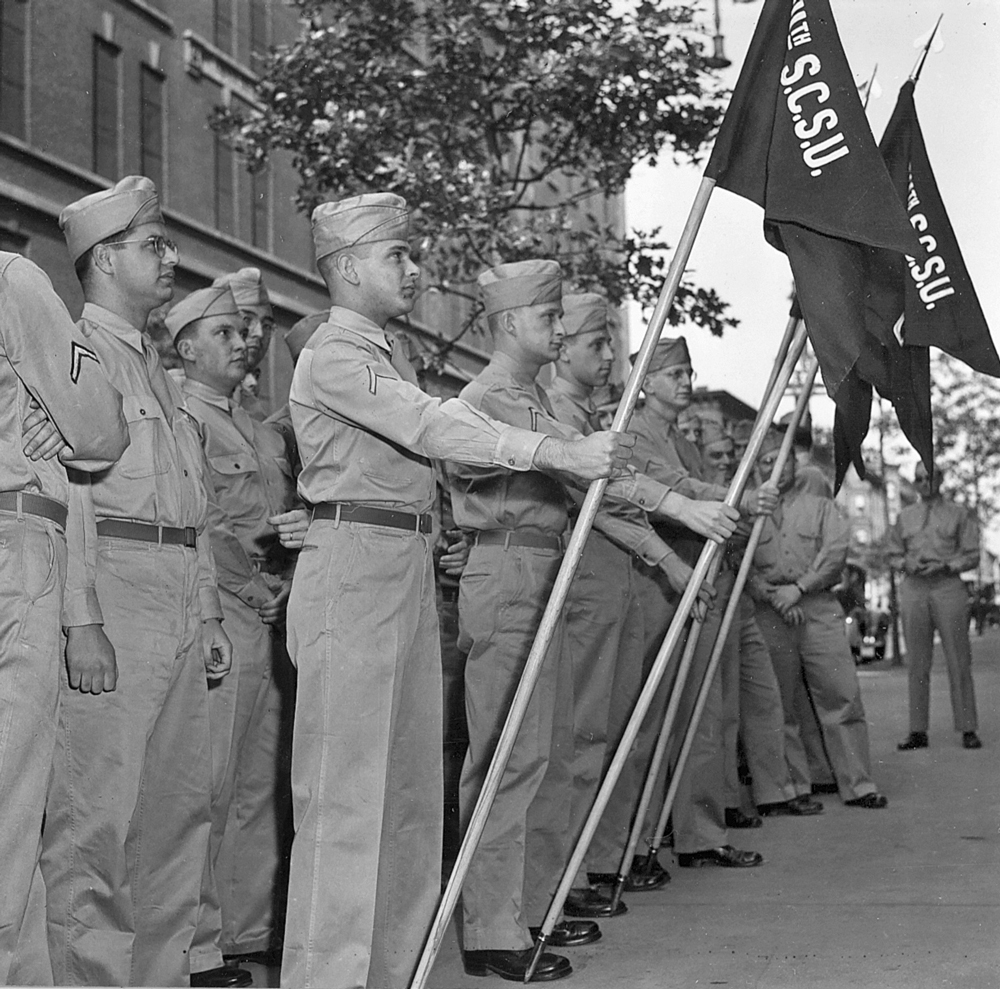 Throughout the war, Downstate balanced its national duty with steadfast local service—caring
for civilians, training new physicians, and contributing to emerging fields such as
industrial medicine. When the war ended, many graduates returned home, bringing with
them the discipline, compassion, and sense of purpose forged through military service.
Throughout the war, Downstate balanced its national duty with steadfast local service—caring
for civilians, training new physicians, and contributing to emerging fields such as
industrial medicine. When the war ended, many graduates returned home, bringing with
them the discipline, compassion, and sense of purpose forged through military service.
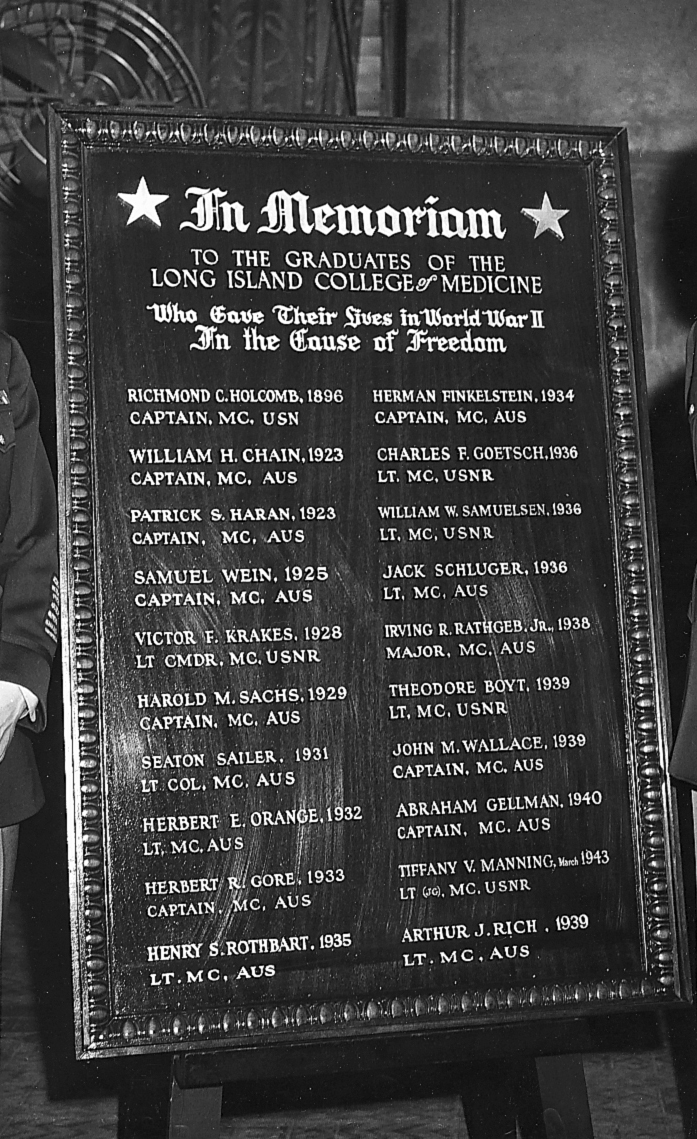 A memorial plaque honors the Downstate graduates who “gave their lives in the cause
of freedom,” serving as a poignant reminder of how deeply the conflict has shaped
our institution’s history.
A memorial plaque honors the Downstate graduates who “gave their lives in the cause
of freedom,” serving as a poignant reminder of how deeply the conflict has shaped
our institution’s history.
This Pearl Harbor Day, as we remember those who served during World War II, we also celebrate the veterans who continue to serve at Downstate, as well as students (past and present servicemen/women), trainees, faculty, staff, and alums whose commitment to duty strengthens our mission every day. Their legacy, past and present, remains a source of pride and gratitude for our entire community.
Collectively, we say, “Thank you for your service.”