Earlier Transfusions May Help Protect the Heart After Major Surgery
By Office of the President | Dec 2, 2025
American Heart Association Scientific Session
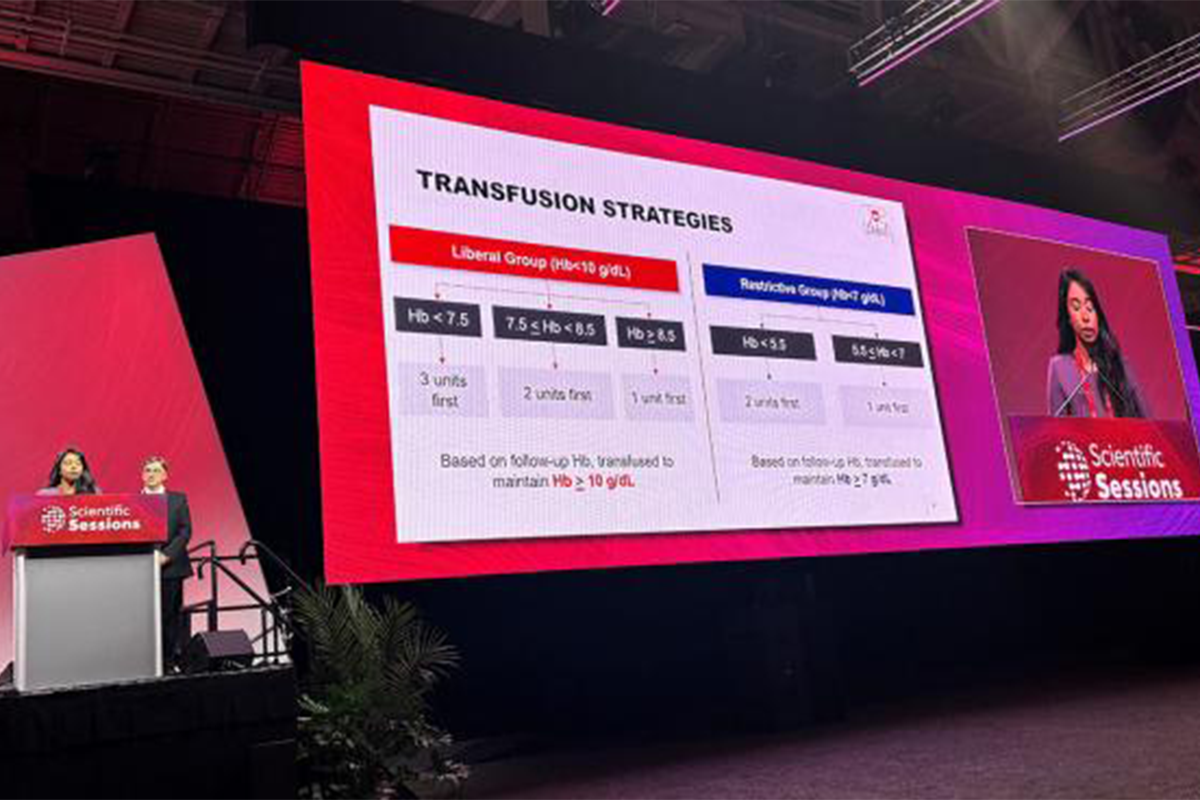
New evidence from the nationwide TOP Trial (Transfusion Trigger After Operations in High Cardiac Risk Patients) suggests that a small but meaningful shift in clinical practice may help protect adults with heart disease as they recover from major surgery. The study, a featured session at the American Heart Association’s Scientific Sessions and published simultaneously in JAMA, continues to draw national attention for what it reveals about how the heart responds to anemia in the days immediately following surgery.
Downstate played a defining role in this critical research. Panos Kougias, M.D., M.Sc., Chair of Surgery, and Sherene Sharath, Ph.D., MPH, Assistant Professor of Surgery and Epidemiology and Biostatistics, were authors of the JAMA publication and delivered the TOP Trial results from the podium. They were joined on the manuscript by Downstate co-authors Natasha Becker, M.D., General Surgery residency program director, and Justin C. Choi, M.D., Chief of Vascular Surgery. The broader study, conducted across 16 Veterans Affairs Medical Centers, highlights the scale of the work and the increasing visibility of Downstate’s surgical and cardiovascular research on the national stage.
The study examined a question that affects thousands of patients each year: When is the safest moment to give a blood transfusion after major general or vascular surgery in someone with heart disease?
Traditionally, clinicians have waited for hemoglobin levels to drop significantly before administering a transfusion. But the trial found that waiting too long may leave the heart more vulnerable when it is already under strain.
Patients who received blood earlier, before reaching the usual transfusion threshold, experienced fewer rhythm disturbances, a sign that the heart is under stress, and fewer early signs of heart failure, which often prolong recovery.
Rates of the most serious outcomes, death, heart attack, and stroke, were similar regardless of transfusion timing. What changed was the heart’s stability during the vulnerable recovery window, when it must work hardest to respond to anesthesia, inflammation, and blood loss.
If further research confirms these findings, clinicians will likely shift away from rigid numerical thresholds and toward individualized transfusion strategies that consider both laboratory values and a patient’s tolerance for reduced oxygen-carrying capacity.
For patients and their families, the message is straightforward: earlier transfusion may help keep the heart stable without adding risk.
For an academic medical center serving a borough with some of the city’s highest heart-disease rates, these findings matter now, and they show how Downstate’s surgical and cardiovascular teams are shaping national practice.
Tags: Surgery