Arthur Ashe Institute Builds Mental Health Equity at Downstate
By Office of the President | Jan 20, 2026
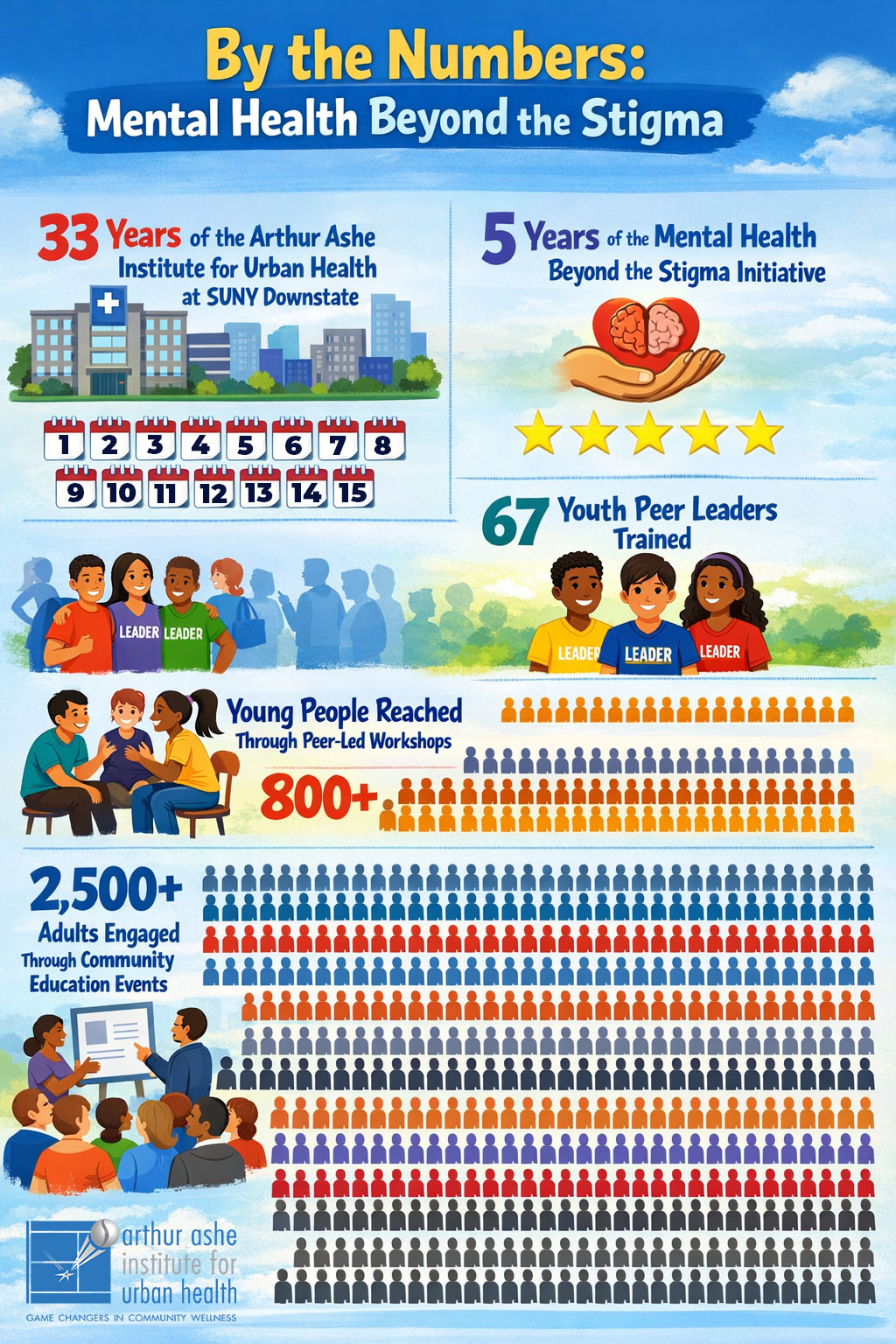
 Thirty-three years after tennis great Arthur Ashe established the Arthur Ashe Institute for Urban Health at Downstate, the Institute marked its anniversary with a convening focused on mental
well-being, community engagement, and shared responsibility for advancing mental health
equity in communities of color.
Thirty-three years after tennis great Arthur Ashe established the Arthur Ashe Institute for Urban Health at Downstate, the Institute marked its anniversary with a convening focused on mental
well-being, community engagement, and shared responsibility for advancing mental health
equity in communities of color.
Community partners, clinicians, students, and community members came together with the common goal of strengthening approaches to mental health grounded in lived experience and responsive to structural inequities.
Marilyn A. Fraser, M.D., Chief Executive Officer of the Arthur Ashe Institute for Urban Health (AAIUH), opened the program by revisiting Arthur Ashe’s original framework for the Institute. From its founding, the work has centered on four pillars: direct community engagement, expanding pathways into the health professions for young people of color, building strategic partnerships, and informing policy to drive systemic change.
Those pillars continue to guide the Institute’s Mental Health Beyond the Stigma portfolio, which integrates mental health into community outreach across salons and barbershops, faith institutions, housing developments, and schools. The youth-focused initiative uses peer engagement and community-based workshops to support open discussion of mental health and reduce stigma. This approach recognizes the role of social conditions, stressors, and resource access in shaping mental health.
Stacey Wright, LCSW, MPH, Counselor, AAIUH, led a grounding exercise that encouraged reflection and collective presence, acknowledging the communities served and the work ahead. Kenya Kirkman, Senior Program Coordinator, outlined the development of Mental Health Beyond the Stigma over the past five years. Listening sessions involving youth and adults have expanded into a peer leadership model and community education workshops, and community feedback continues to shape program design and delivery.
Youth participation was a central element of the program. Former peer leader Joanna Blake, a 16-year-old high school student, shared a poem and spoke about the connection between place, access to care, and health outcomes. Other youth-led sessions addressed topics such as violence, social media, and body image, with young people developing and facilitating workshops for their peers.
Evan Auguste, Ph.D., assistant professor in the Department of Psychology at John Jay College of Criminal Justice, delivered the keynote address examining historical inequities in mental health care and the limited representation of mental health professionals of color. He emphasized the need for intentional efforts to address these gaps. He also highlighted youth peer advocacy as one approach to expanding mental health awareness and support.
Breakout sessions later in the program focused on practical strategies for stress management, creative expression, and reflection. Participants also contributed to a collective “justice quilt,” with individual squares representing personal perspectives on equity and well-being.
The program concluded with remarks from Humberto Brown, MA, Director of Health Disparities and New Constituencies Development at the Institute, who summarized key themes and emphasized the importance of sustained collaboration.
This anniversary gathering underscored the Institute’s ongoing work, reaffirmed its partnership with Downstate, and highlighted a shared commitment to advancing mental health initiatives embedded in the communities we serve.
Tags: Arthur Ashe