Having trouble viewing this email? Try it in your
browser
SEPTEMBER 3, 2019 | DOWNSTATE HEALTH SCIENCES UNIVERSITY
Mark your calendars, the bulletin is now coming to you every Monday... Don't miss
out!
WELCOME & WELCOME BACK!
It’s the start of our first full school year of Downstate Health Sciences University
since our name change, and Academic Year 2019 is fully underway following our annual
White Coat ceremonies and August orientations. Students are pouring in and the halls
of our beloved campus are roaring with their familiar chatter as they prepare to embark
on their journeys of becoming the healthcare professionals and scientists of tomorrow.
While the launch of another academic season may not be new to many of our students,
faculty, and staff—this year has a lot more up its sleeve than you may realize. This
season is all about the evolution, growth,and progress of Downstate; it marks the dawning of a new era for our institution. Though there
is still work to be done to fully unearth Downstate’s distinction and value and to
reveal the merits of its historic contributions, we continue to make promising strides
and we are recapturing the excellence that has always distinguished this institution.
Upon accepting the honor in 2017 of leading this great institution, one of my primary
objectives was to adopt a new institutional name that would fully represent our unique
and unmatched offerings. Historically, Downstate donned a litany of monikers that
never quite embraced the whole gamut of what we do through education, research, and in clinical care. Starting with its founding in 1860, our institution was first introduced to the
world as the “Long Island College Hospital – Collegiate Division,” and was renamed
in the 1930s as the “Long Island College of Medicine.” When we merged with The State
University of New York (SUNY) in 1950, we became known as “SUNY College of Medicine
at New York City,” only to adopt the informal name “Downstate Medical Center” in 1954.
Finally, in 1986, we re-emerged as “SUNY Health Science Center at Brooklyn.”
Over time, the persistent changes to our identity compromised the strength of our
brand—making clear the need to redefine who we are while telling our own story to
the world. To that end, in June 2019, the SUNY Board of Trustees voted unanimously
to approve my proposal,amending the Institution’s legal name to “The State University of New York Downstate Health Sciences University.” Our newdesignation now more preciselyreflects the robust assortment of academic programs offered across our five health
and science-centric schools, as well as our research enterprise and the clinical care
services provided within our adjoining teaching hospital, University Hospital of Brooklyn
(UHB). In concert with the rollout of our new name, we have developed a year-long campaign
designed to competitively reposition Downstate’s brand that the Office of Communications
& Marketing (OCM) will officially kick-off mid-fall. OCM has provided an updated, temporary logo for official use until the rebranding initiative has concluded.
Of course, no plan to reposition Downstate’s brand could be complete without considering
the platform that engages the source of our largest, most consistent audience—our
website. In its current state, our site lacks consistency and fluidity in architecture, leaving
it confusing for users to navigate and ultimately hindering our ability to effectively
reach and recruit prospective students, faculty, practitioners, staff, benefactors,
and patients. Put simply, our site has been in need of a complete overhaul for years
and I’m excited to announce that day has finally come!
This past July, we concluded our vendor search and awarded the bid toan external web design agency selected to build us a fresh, innovative, and user-friendly
site. Led by John Zubrovich, Director of New Media Services in the Office of Communications & Marketing, Downstate’s Website Team is currently finalizing the proposal and plans to kick-off the redesign this Fall.
The new site will be built with function, aesthetic presentation, and data-driven
content in mind. Moreover, the site will be designed as a primary tool for recruiting
prospective students, faculty, and staff, while also connecting with the community,
and sharing our innovations in research and clinical care.
Change is in the air, and the 2019-2020 school year is shaping up to be our best yet—for
our campus, for the community, and most especially, for the heart of this great institution—our
students, faculty, and staff. All of you are the reason this institution still stands;
you are the drivers for healing in this community. It is your work that empowers this
institution to improve lives globally. YOU are the BEST of Downstate!
Here’s a peek at some of the great work from our students, faculty, and staff, as
well as some of the happenings you may have missed while the Bulletin (and many of you) were away on summer hiatus.
COLLEGE OF MEDICINE | Class of 2023
The first week of August is always a busy time at Downstate as the new school year
begins to take shape, but it’s especially eventful for the College of Medicine (COM) with the arrival of its newest cohort.
The Class of 2023 is officially here and orientation week went off without a hitch! The week was packed
with activities with carefully designed days to prepare each cohort for the road ahead—giving
each a glimpse into the next four years of their lives as medical students. Detailed
overviews of the curriculum, tours of the anatomy lab, and introductions to their
PBL groups were peppered with workshops on cultural competency and a Peer Wellness
mentoring dinner—emphasizing Downstate’s values of inclusive care and collaborative
learning.
August Orientation also serves as an opportunity for students to create strong bonds
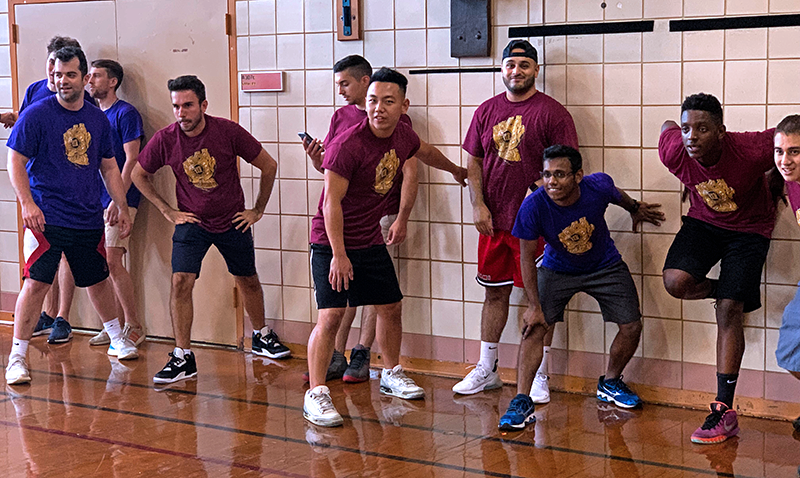
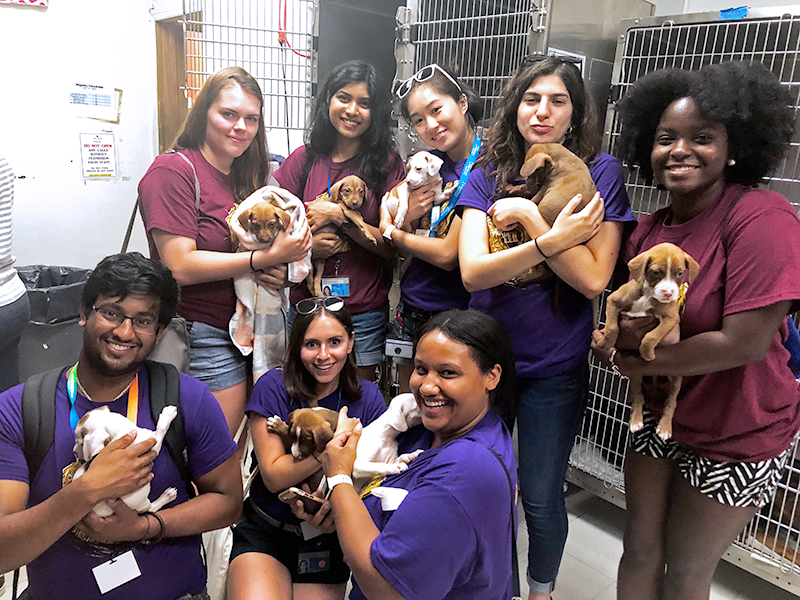
with peers and the community. Earlier this month, in honor of SUNY’s motto, “To learn-To
search-To serve,” more than 250 COM students spent an entire day volunteering across 11 different community service program sites in Brooklyn. Students dispersed
in groups throughout the borough for an afternoon of immersive community service learning—visiting
and offering their support to local children’s summer camps, adult rehabilitation
centers, animal shelters, and the Boys and Girls Club.
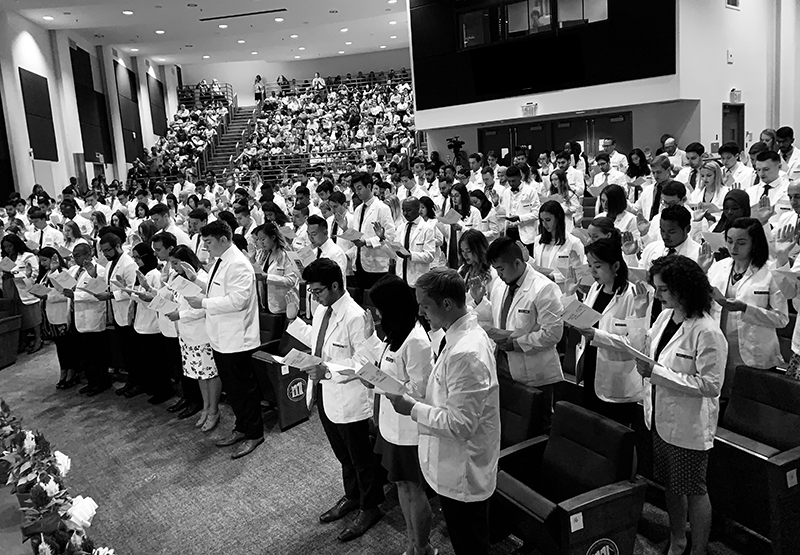
The week culminated with Downstate’s 25th Annual White Coat Ceremony, as 200 doctors-in-training recited the Hippocratic Oath before their families and
closest loved ones—emphasizing the importance of compassionate care, while promising
to practice the art of medicine with honor, integrity, and loyalty.
Many thanks to the Office of COM Interim Dean Michael Luchessi, M.D., Meg O’Sullivan in the Office of Student Life, and Jeffrey Putman, Ed.D. in the Office of Student Affairs, as well as all participating students and staff for their seamless coordination
of the week. I offer a very special thanks to four second-year orientation leaders—Chinelo Debrady (who joined Downstate via the Bridges Program), Aaron Huang, Sirish Khanal, and Ann Yang for wrangling and recruiting nearly 50 of their peers to help the Class of 2023 settle
in.
RESEARCH ROUNDUP
Henri Tiedge, Lupus Study
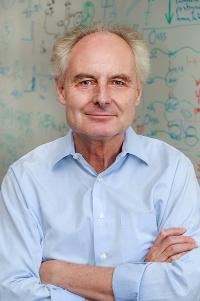
In research news, a breakthrough study led by Henri Tiedge, Ph.D. (Distinguished Professor, The Robert F. Furchgott Center for Neural and Behavioral
Science) is makingheadlinesafter researchers identified the specific antibody target implicated in neuropsychiatric
symptoms of lupus.
Systemic lupus erythematosus (SLE), the most prevalent form of lupus, is a chronic
autoimmune disease characterized by tissue inflammation, rash, pain, fatigue, depression,
and cognitive difficulties. A form of this disease, called neuropsychiatric SLE (NPSLE),
is marked by the overactivation of the immune system, and cognitive and psychiatric
symptoms that include seizures, headaches, mood swings, and psychosis.
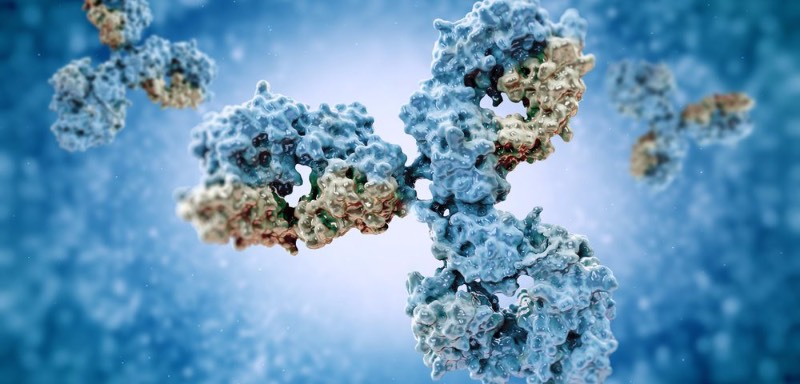
Published in the Journal of Neuroscience, the study — Neuronal BC RNA transport impairments caused by systemic lupus erythematosus autoantibodies— identified antibodies that are directed at regulatory brain cytoplasmic RNAs (BC ribonucleic
acid) that are unique to lupus patients. Brain cytoplasmic RNAs control the production
of proteins that regulate the activity of brain synapses—controlling the way our brain
receives, saves, and recalls information.
Dr. Tiedge notes this discovery not only sheds light on the possible origins of neuropsychiatric
symptoms in lupus, but also opens the door to the development of new treatments targeting
these damaging autoantibodies.
In addition to Dr. Tiedge, other investigators include Ilham A. Muslimov, M.D., Ph.D.; Anna Iacoangeli, Ph.D.; Taesun Eom, Ph.D.; Anne Ruiz, Ph.D.; Ellen M. Ginzler, M.D., MPH;Stacy Stephenson, AAS, RLAT; and Madisen Lee, volunteer. The study was a collaboration between basic science and clinical researchers at
SUNY Downstate Health Sciences University, including The Robert F. Furchgott Center
for Neural and Behavioral Science, and the SUNY Downstate Division of Rheumatology.
SCHOOL OF HEALTH PROFESSIONS | ADAPT Community Network
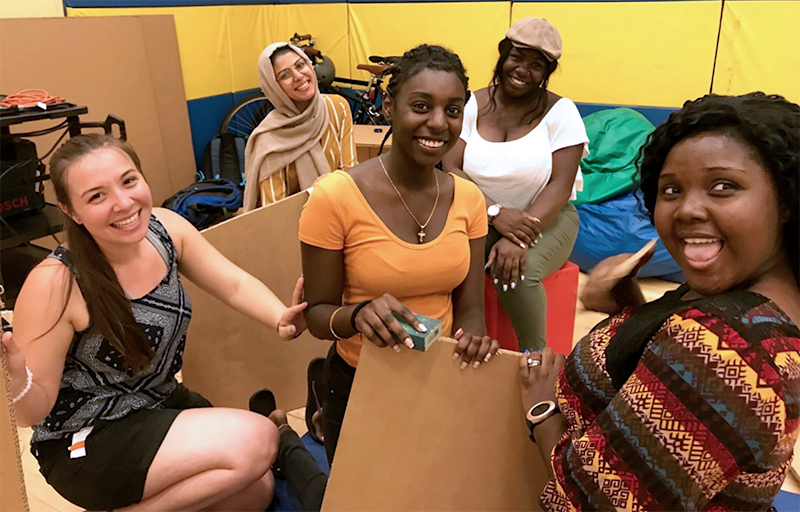
As a result of a longstanding partnership with the newly-renamed School of Health Professions (SOHP), the ADAPT Community Network (formerly United Cerebral Palsy of Brooklyn) joined forces with the Occupational Therapy Program (OTP)programfor an interactive two-day workshop where Downstate students not only learned about
adaptive innovations and devices for children with physical disabilities—they made
them, too!
The workshop kicked-off in the classroom with guest-lecturer and Downstate Alum,Deric Ko, OTR/L, whose lesson focused on how to effectively screen teachers and caregivers to assess
the needs of pediatric clients with positional deformities.
The final day (TriWall Day) was spent at the ADAPT center where students were paired with clients and tasked
with considering supportive designs for every aspect of their learning, eating, and
resting. Students then took the knowledge acquired from in-class instruction and put
it into practice—using therapeutic positioning techniques to develop and implement custom-designed seating
devices for their assigned clients.
In groups of five, students designed, planned, and fabricated finished products out
of durable, reinforced cardboard called TriWall. Susan Fridie, OTR/L from the Adaptive Design Association also consulted on each project to ensure the design, construction and integrity of
the customized adaptations addressed children’s needs.
These are the types of interactive learning experiences that enhance and support our
educational programming, while simultaneously underscoring Downstate’s values. Through
the ADAPT-OTP partnership, traditional in-class instruction is brought to life—leaving
students with invaluable hands-on experiences that can be put into professional practice,
all while healing and supporting communities that need us most.
Many thanks to SOHP’s faculty and staff for making this partnership possible.
COLLEGE OF NURSING | The Fresh Air Fund
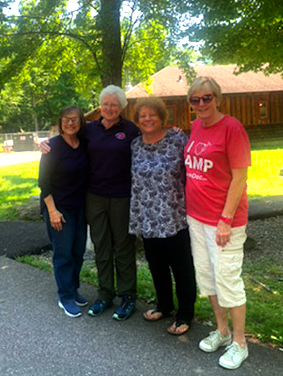
The Fresh Air Fund, an independent, not-for-profit agency, has provided free summer
experiences to more than 1.8 million New York City children from low-income communities
since 1877. This year, the Fresh Air Fund established an exciting partnership with SUNY Downstate in support
of their mutual commitment to serving New York City’s children and families. In late
June, nursing faculty from Downstate’s College of Nursing (CON)—in collaboration with nursing faculty from Stony Brook University— traveled to the
Fresh Air Fund camps in Fishkill, NY, to provide educational programs for nurses and
counselors in preparation for their 2019 summer session.
Ms. Susan Powell, Nurse Coordinator from the Fresh Air Fund, and Shirley Girouard, Ph.D., RN, FAAN, Professor and Associate Dean for Research and Innovations from the CON, jointly coordinated the day's programs that were designed to prepare
more than 220 camp counselors and 15 nurses to identify and address the individual
and collective healthcare needs of the campers and develop skills to promote well-being
in mind, body, and spirit.
The 3-hour workshop for counselors was conducted by Michele Solloway, Ph.D., MPA, SEP, RPP, LMT, Senior Scientist in the CON. The workshop’s content defined “health” and “well-being,”
discussed what gets in the way of our well-being, and included lessons in raising
awareness about Trauma and Adverse Childhood Experiences (ACEs) and building resilience
to promote health and well-being.
A clinical education program for the nurses was provided by Kathleen Bratby, Ed.D., RN, Clinical Associate Professor in the CON andKammy McLoughlin, DNP, RN, CPNP-PC/AC, Program Director, Advanced Practice Nurses
in Child Health, atStony Brook University School of Nursing. Due to recent outbreaks throughout New York,
clinical updates focused on measles, as well as on asthma, diabetes, sickle cell anemia, food allergies, seizures, and sun safety. The
clinical program also addressed the social and emotional aspects of caring for a diverse
pediatric population.
Thank you to our esteemed faculty and staff from the College of Nursing for tirelessly
working to expand Downstate’s footprint—educationally, clinically, and throughout
the community.
NEW FACULTY
Downstate’s Family Medicine Welcomes Anita Beecham-Robinson, M.D.
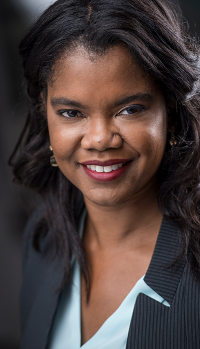
We are thrilled to welcome Anita Beecham-Robinson, M.D., to SUNY Downstate’s Department of Family Medicine.
Dr. Beecham-Robinson is a graduate of the University of Miami School of Medicine who
completed her residency in Family Medicine at Montefiore Medical Center in the Bronx.
Having practiced medicine for more than 15 years at a number of prestigious healthcare
systems and institutions, Dr. Beecham-Robinson has become known for her leadership
in delivering the highest quality in patient care.
She is a board-certified family physician and an advocate for optimizing the delivery
of care in underserved communities. Dr. Beecham-Robinson’s approach to practicing
medicine is rooted in understanding and relating to the culturally and ethnically
diverse patient populations she serves. With a strong reputation for building relationships
in the communities in which she practices, she is dedicated to providing excellent
care to every patient and in ensuring health equity to all.
Dr. Beecham-Robinson’s clinical interests include preventive medicine and women’s
health, as well as diabetes, and cardiovascular disease. She’s also featured in our
new Family Medicine ad!
Please join me in sending Dr. Beecham-Robinson a very warm Downstate Welcome!
FACULTY SPOTLIGHT
Daniel Ehlke, Ph.D.
As I reflect on my time here at Downstate, I can’t help but recall the number of occasions
I’ve been stopped in the halls by students eager to tell me how much they appreciate
their Attending Physicians, Deans who rush to tout the accomplishments of their esteemed
faculty, and administrators who can’t seem to say enough to acknowledge and promote
the work of their committed, front-line staff.
Having the privilege and honor to lead Downstate has cemented what I have always believed:
that any institution is only made great by the tremendous contributions of its most
prized investors—its people. To that end, the President’s Spotlight was designed to honor students, faculty, and staff dedicated
to advancing our institutional mission and objectives, and whose efforts far exceed what is required of them.
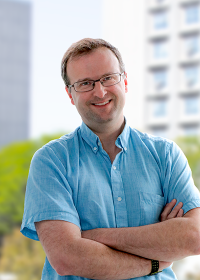
I am proud to announce Associate Professor Daniel Ehlke, Ph.D., MA, as this week’s President’s Spotlight honoree.
Dr. Ehlke joined Downstate after earning his Ph.D. in Political Science from Brown
University in 2009. He has since emerged as one of the most prolific and energetic
leaders in the School of Public Health (SPH). His collaborative, passionate, and supportive approach to academic instruction has
garnered consistently high-praise and recognition from not only his students, but
also from his peers and Downstate’s leadership alike.
Dr. Ehlke is known at Downstate as one of theleaders who helped to successfully elevate Downstate’s SPH program to meet national
accreditation standards from the Council on Education for Public Health. And, as a
member of the Department of Health Policy and Management since 2010, he has played
an integral role in designing and implementing curricula for several core courses
and electives in the MPH and DrPH programs, including:
Introduction to Health Policy and Management
Health Care Advocacy and Politics,
Health Policy in the Delivery System,
International Healthcare Systems,
Policy Studies in Urban and Immigrant Health,
Public Health Management and Ethics,
Public Health Policy and Politics Seminar
Policy Issues in Mental Illness.
If his work on campus wasn't impressive enough, his efforts beyond Downstate continue
to illuminate our institution. Dr. Ehlke currently serves as the Co-editor of Health Politics and Policy, now in its 5th edition, and has authored a remarkable nine articles in its professional journals.
A fun fact? He’s a self-described “weather nerd” who is as passionate about issuing
weather updates and predictions as he is about health policy.
It’s a safe assumption by many in the SPH that Dr. Ehlke is living his life’s passion
and true purpose—and while that may be true, he notes the center of his life is his
beloved wife and three children: 5-year old Kit and 8-month old twins, Marcus and
Meredith.
Congratulations, Dr. Ehlke, and thank you for your genuine commitment and dedication
to our students at Downstate.